
How to Freeze Asparagus
This post may contain affiliate links.



Freezing fresh asparagus is a great way to prevent it from going to waste in your fridge. I’ll show you how to freeze asparagus so that you always have it on hand and can use it all year long, even when it isn’t in season.

There’s nothing more frustrating than forgetting about fresh produce in the fridge. I always seem to remember that things are in the drawer after they’ve spoiled and can no longer be used.
Benefits of Learning How to Freeze Asparagus
Fortunately, freezing asparagus is super simple to do, and even frozen, it retains all of its nutrients and flavor. This way, no matter when or how you serve it, the spears will always taste fresh.
In addition to extending the shelf life, freezing produce can save you some money. If you grow asparagus or often find it at your local farmers market, then you can stock up when it is in season and is a more affordable price. Then just freeze it to use at a later date.
Possibly the best reason to freeze fresh produce is to reduce food waste.
Aside from asparagus, you can also learn how to freeze corn on the cob, cucumbers, and fresh ginger. I even have tutorials on freezing strawberries and pineapple to use in smoothies!
Ingredients
Stock up on asparagus in the early spring months, when it’s in season. Then, freeze the spears to use in the fall and winter months, when it’s harder to find and/or is more expensive. The government has a seasonal produce guide that’s really helpful.

Quick Tip
When you shop for fresh asparagus, avoid any spears that are limp, discolored or soft.
How to Freeze Asparagus
The freezing process is super simple—just follow this step-by-step guide!

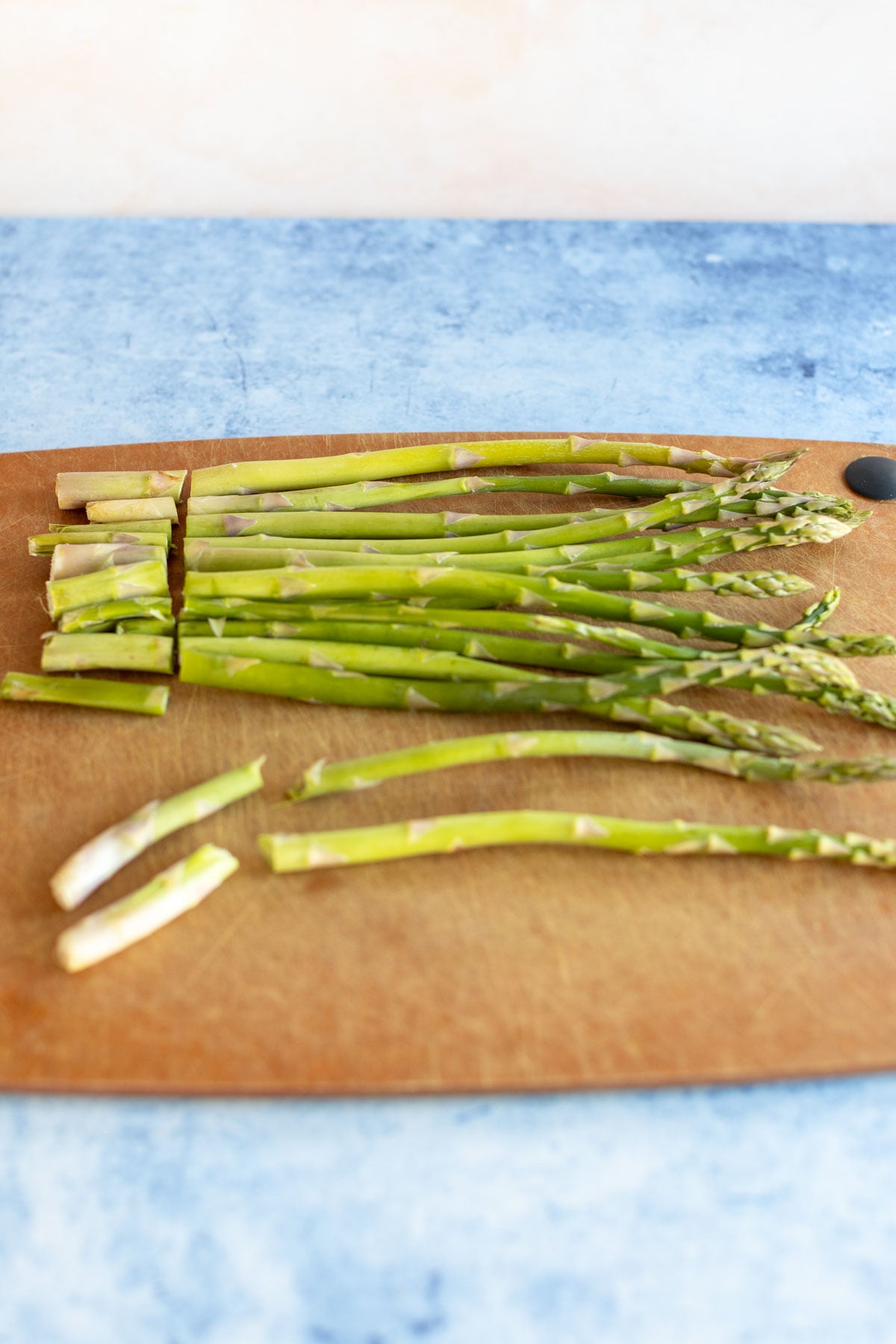
- Wash the spears. Wash the asparagus spears under running water, then dry them with paper towels or a clean cloth.
- Remove the tough, woody ends. Use a sharp knife to trim off the tough ends. It will likely be the bottom 1-2 inches.

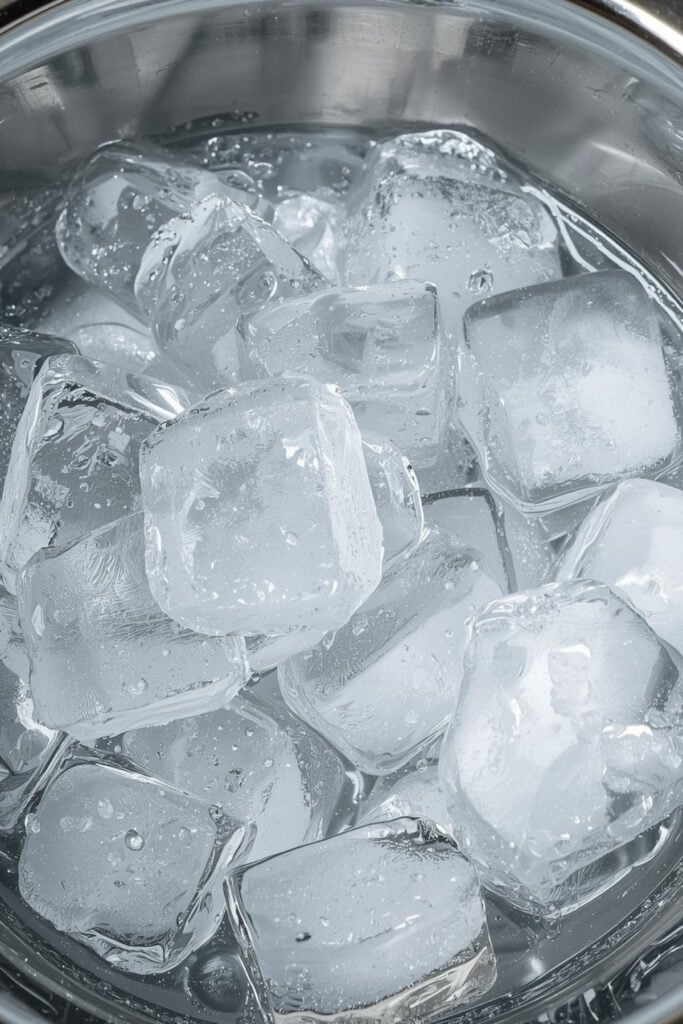
- Bring water to a boil. Use a large enough pot to hold the spears without over crowding.
- Prepare an ice bath. While the water is coming to a boil, fill a large glass or stainless steel bowl with ice cubes and water.


- Blanch asparagus in boiling water for 2-3 minutes. Blanching will partially cook the vegetables while also removing the enzymes that can cause it to spoil.
- Transfer to the ice bath. Use tongs to transfer the spears from the boiling water into the ice water. This stops the cooking process.
- Remove from the ice bath and freeze the asparagus. Arrange the spears in a single layer on a baking sheet and put it in the freezer for a couple of hours.
- Transfer the frozen asparagus to bags or airtight containers. To prevent freezer burn, it’s important to use freezer-safe bags or containers. You can freeze asparagus for up to 8 months.
Ways to Cook Asparagus
You can cook frozen asparagus in a skillet, in your air fryer, in the oven, and even on the grill. Grilled asparagus is actually super simple to make, and no thawing is necessary! Just toss the frozen spears in oil and seasonings, then grill it until they’re tender and flavorful.
Uses for Frozen Asparagus
Air fryer asparagus is one of the easiest side dishes you can make! It tastes great with proteins like turkey, ham, air fryer filet mignon, and Instant Pot pork chops.
There are plenty of ways to include frozen vegetables in main dish recipes, too. One of my favorites is one pan Italian chicken breasts—the frozen asparagus cooks right in the skillet with the chicken.

Tips for Success
Follow these few basic tips to ensure the best turn-out when blanching and freezing fresh asparagus:
- Do not skip the blanching process! Unlike frozen green beans that can be frozen “raw”, unblanched asparagus cannot be frozen. This process helps to lock in the flavor, but also helps prevent soggy or mushy asparagus after freezing. Plus, it helps maintain that beautiful rich green color!
- Wash asparagus and lightly dry with paper towels or a clean kitchen towel in order to remove any dirt before blanching and freezing. It is important to do this so that you can maintain the quality of the frozen asparagus.
- Thicker spears may need longer blanching times, but be careful not to overcook your asparagus! It will turn a bright green color once it’s ready to go.
FAQs
It is not recommended to freeze asparagus raw. Blanching partially cooks it, helping to maintain the right texture and flavor, and it also removes enzymes that can cause the vegetable to spoil.
After blanching, it is best to flash freeze the asparagus spears before transferring to a container. This just means you’ll need to spread out the asparagus on a sheet pan and stick it into the freezer for a few hours. Once frozen, you can transfer to a freezer-safe plastic bag or airtight container. This helps to ensure that the asparagus spears do not stick together in the freezer.
Other Helpful Resources
How to Freeze Asparagus
Ingredients
- 1 lb fresh asparagus
Instructions
- Wash and trim your asparagus to remove any dirt and then dry with paper towels. Trim off the tough ends of the spears, about 1-2 inches from the bottom.
- To blanch, bring a large pot of water to a boil. Once the water is boiling, add the asparagus to the pot in batches to not overcrowd it. Blanch for 2-3 minutes for standard size spears. While the water is boiling, prepare a large bowl of ice water.
- After 2-3 minutes, remove the asparagus with tongs and add to the ice water. This will shock the asparagus and stop it from cooking further. Allow to sit in ice water for roughly 3 minutes.
- Arrange the asparagus in a single layer on a baking sheet. Freeze for 1-2 hours or until completely frozen. Then transfer to a freezer-safe bag or airtight container.
Equipment
- Cutting Board
- Plastic Bags or Airtight container


love that there’s an easy way to freeze and reuse asparagus for another time! thanks!