Pork Stir Fry Recipe
This post may contain affiliate links.
This pork stir fry recipe has a permanent spot in our dinner rotation! The first time I made it, my kids cheered for the noodles and asked for seconds. Tender pork, vegetables, and a sweet and savory sauce make weeknight dinner feel like a treat.
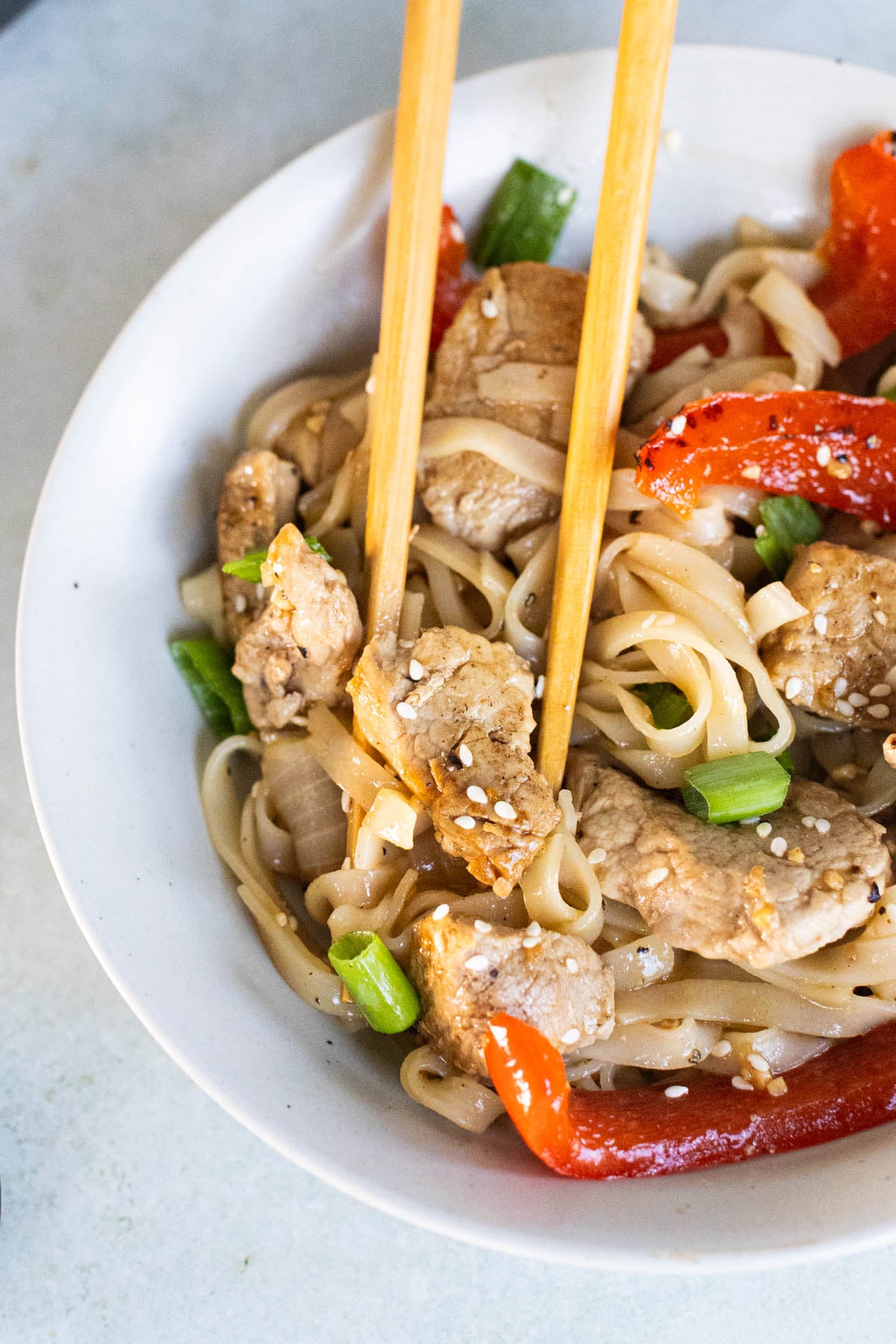
One of my favorite things about this recipe is that I don’t have to think about what else to serve with it. The noodles, vegetables, and pork all come together in one meal.
The first time I put this on the table, my kids gave it a 10 out of 10. When I asked them why they cheered “THE NOODLES” and it was added to our rotation immediately.
Why This Recipe is a Family Favorite
This recipe comes together with fewer dishes which means less cleanup! And unlike other simple stir fry recipes, this meal is packed with flavor.
It’s quick to make too – dinner is on the table in just under 30 minutes. Once the ingredients are prepped, stir frying the pork and veggies takes just a few minutes.
Happy Kitchen Secrets
I’ve made this countless times, so I can save you from a failed attempt during dinnertime.
- This recipe might look like you need a lot of ingredients, but most of them are used to build the sauce. The actual cooking process is quick and straightforward.
- Prep the vegetables and sauce before you start cooking. Stir fry moves fast once the pan is hot.
- Cook the rice noodles while you prep the other ingredients. It is an easy way to make sure everything is ready at the same time.
My kids love the noodles in this dish but you can serve this pork stir fry recipe over rice or another side instead!
If you enjoy Asian meals like this, be sure to try my chicken broccoli stir fry or General Tso shrimp. They are also easy, family-friendly recipes that fit nicely into a busy weeknight meal plan.
Ingredients
You don’t need anything out of the ordinary – just basic cooking staples.

Pork tenderloin is ideal for this pork stir fry recipe because it cooks quickly and stays tender. It typically comes in a pack of two pieces. If you don’t see one at the store, look near the pork chops and roasts in the meat department. Boneless pork chops are an easy substitute and work well when sliced thinly.
Rice vinegar helps balance the sweet and savory flavors in the sauce. It is usually found in the international or Asian foods aisle. If you don’t have any on hand, white wine vinegar is a good substitute.
Sesame oil adds a classic stir fry flavor that is worth using if you have it. A little goes a long way, so one bottle lasts quite a while. If needed, you can substitute avocado oil, though the flavor will be a bit milder.
Soy sauce is used in this recipe, but if you need a gluten-free or soy alternative, coconut aminos also work! You can omit the pineapple juice if you don’t want the extra sweetness in the sauce when using coconut aminos.
Recipe Variations
One of the things I like most about this pork stir fry recipe is how easy it is to adapt based on what you have in the refrigerator. Swap the pork tenderloin for chicken, shrimp, or thinly sliced beef. If you love the sweet pineapple flavor in this dish, you’ll also want to try this crock pot sweet Hawaiian chicken — it uses just 3 ingredients and practically makes itself in the slow cooker.
For a little extra heat, stir in red pepper flakes, sriracha sauce, or your favorite chili oil.
Replace the pineapple with mandarin oranges for a slightly different sweet-and-savory combination. And if your kids find warm pineapple strange, serve the pineapple on the side.
How to Make the Pork Stir Fry
For the full step-by-step instructions, see the recipe card! ⬇️
Jump to Recipe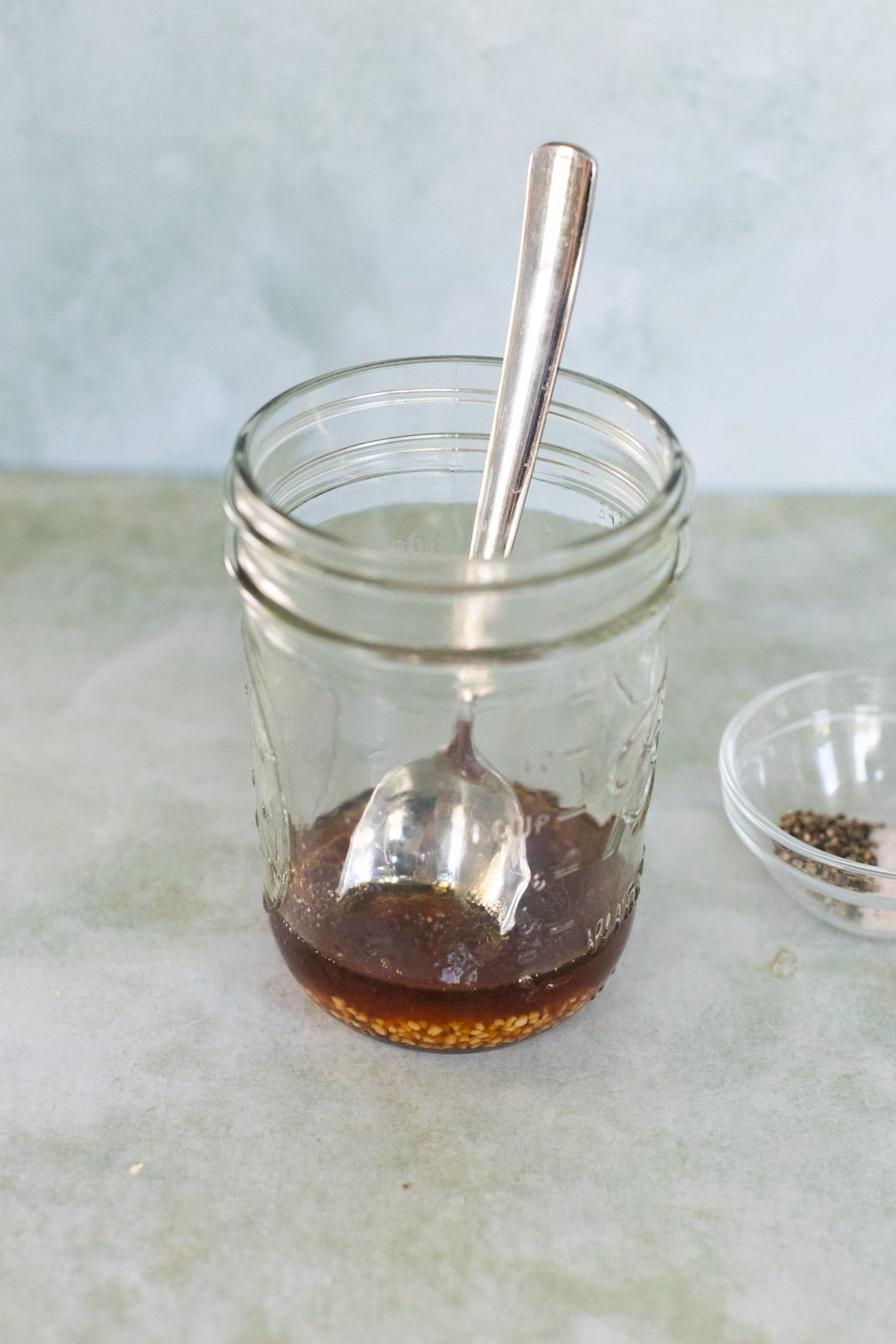
- Whisk the sauce together before you start cooking. You’ll need to have it ready because the stir fry cooks very quickly.
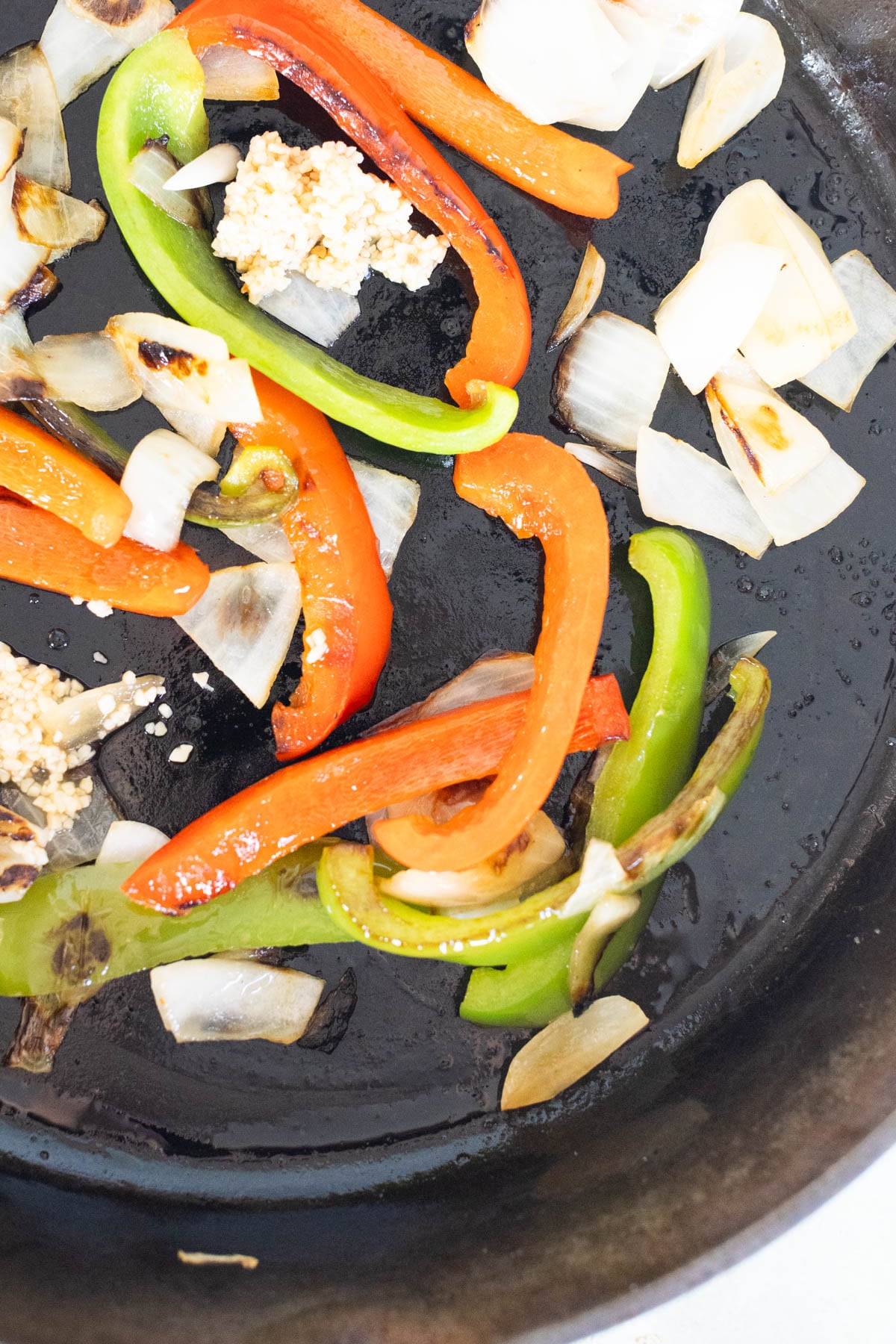
- Sauté the onion and garlic in your hot skillet, cooking them just until they’re soft and fragrant. Garlic can burn easily, so watch it closely or turn the heat down slightly for this part.

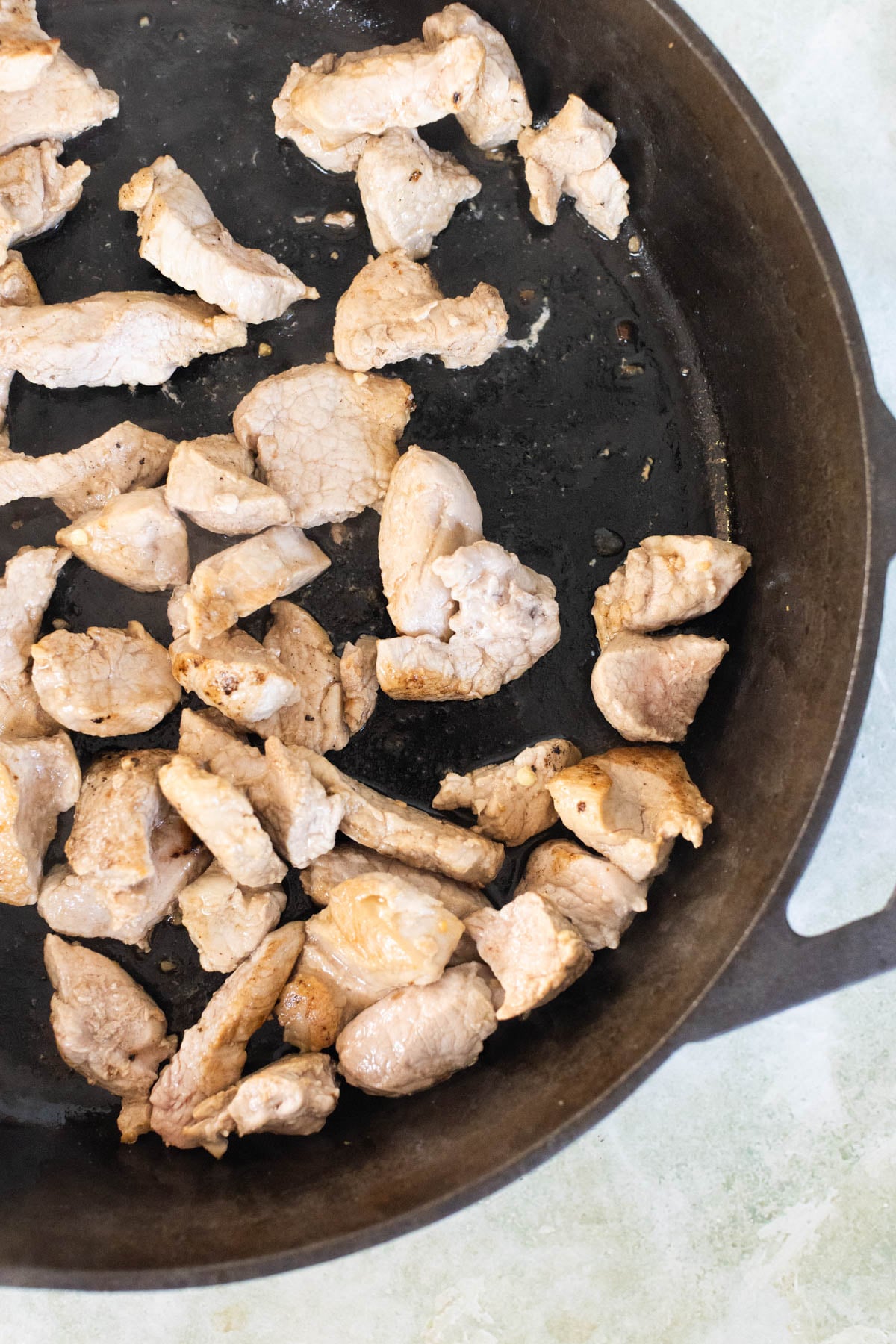
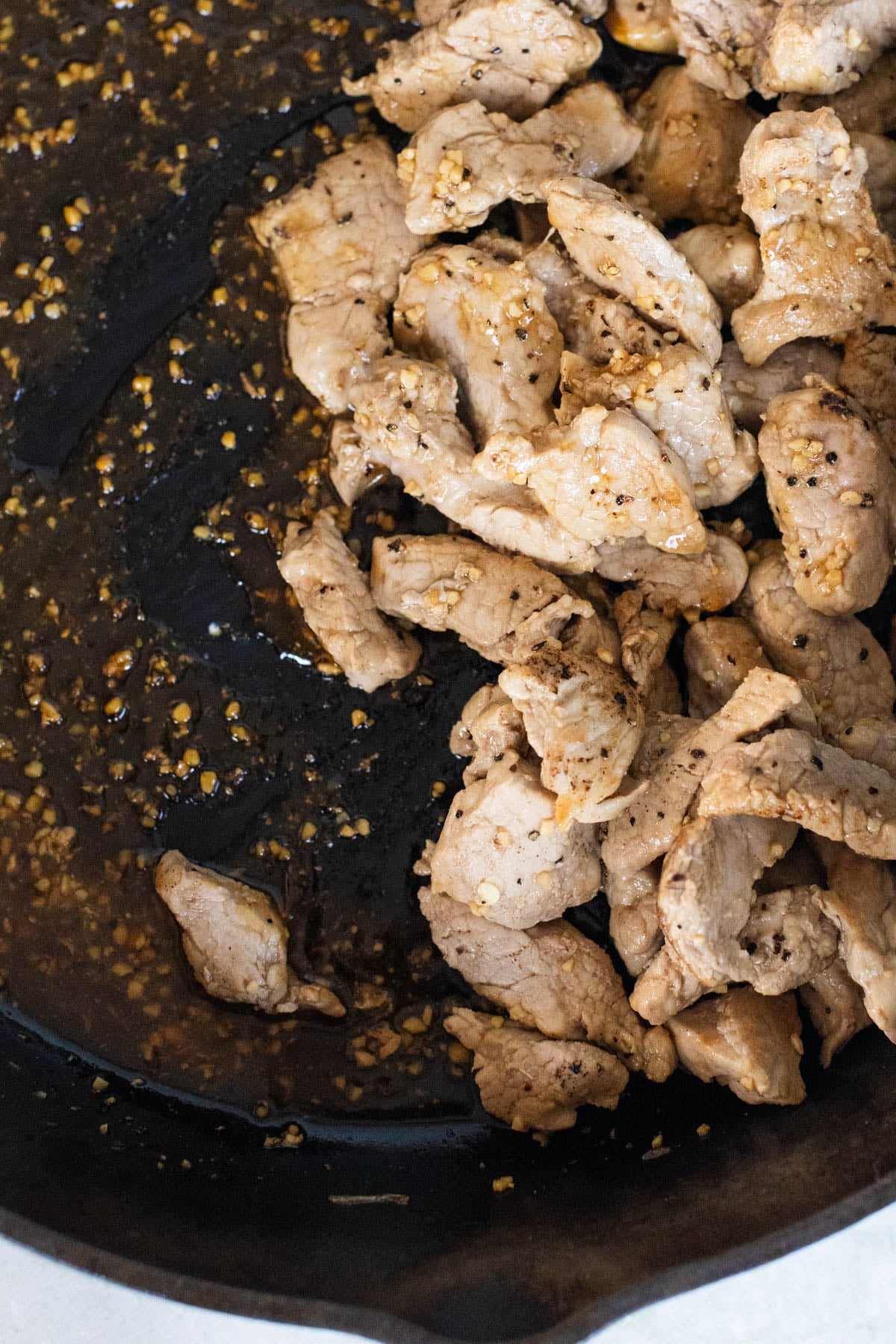
- Add the pork to the skillet. Let the pieces cook for a minute or two before flipping them over. This way, they will sear and not just steam.
- If the pan looks a little dry, add another drizzle of oil. Cook until the pork is lightly browned on the outside.
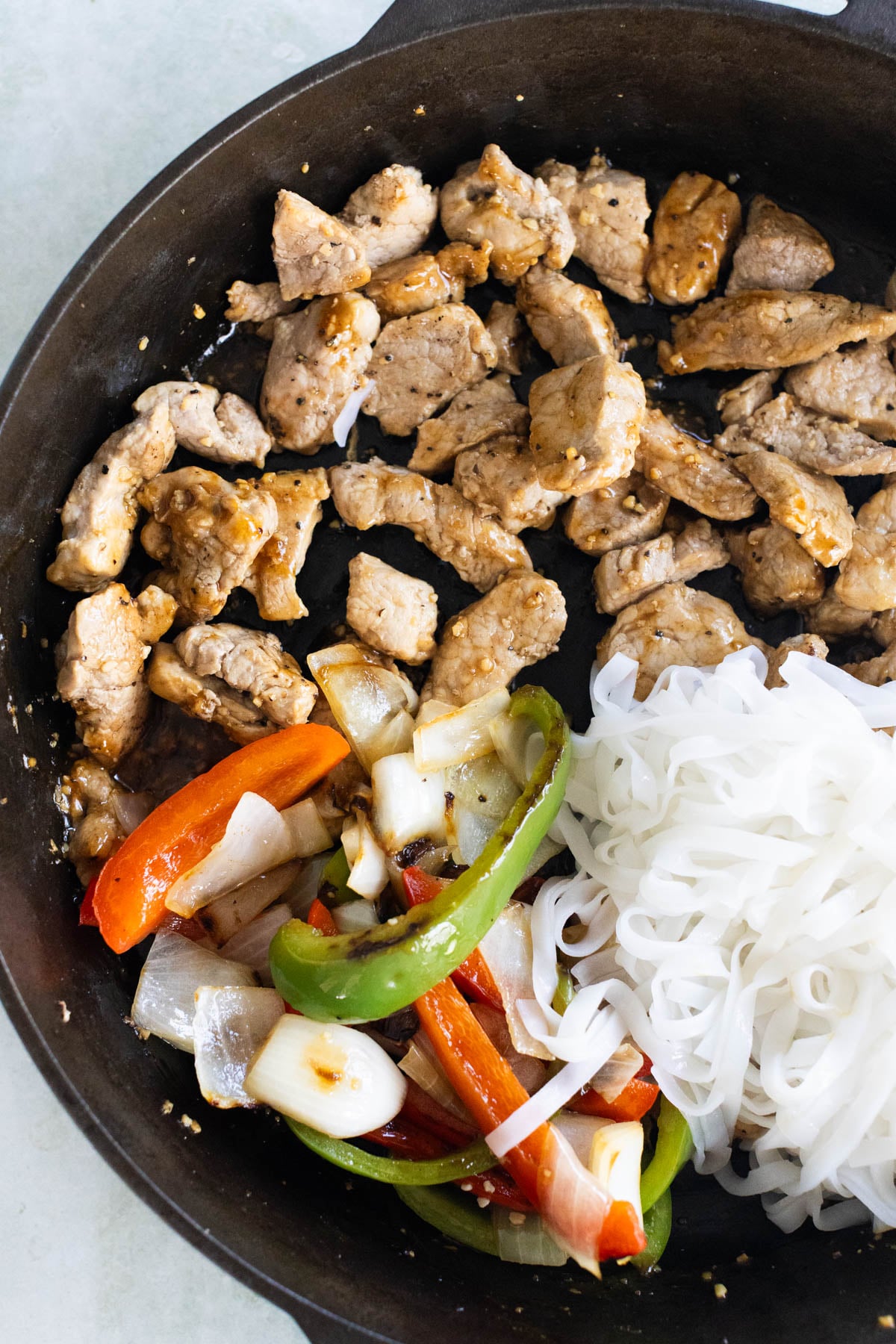
- Pour in the sauce and let it simmer for a few minutes. It will start to coat the pork instead of just sitting in the pan. That’s when it’s ready!
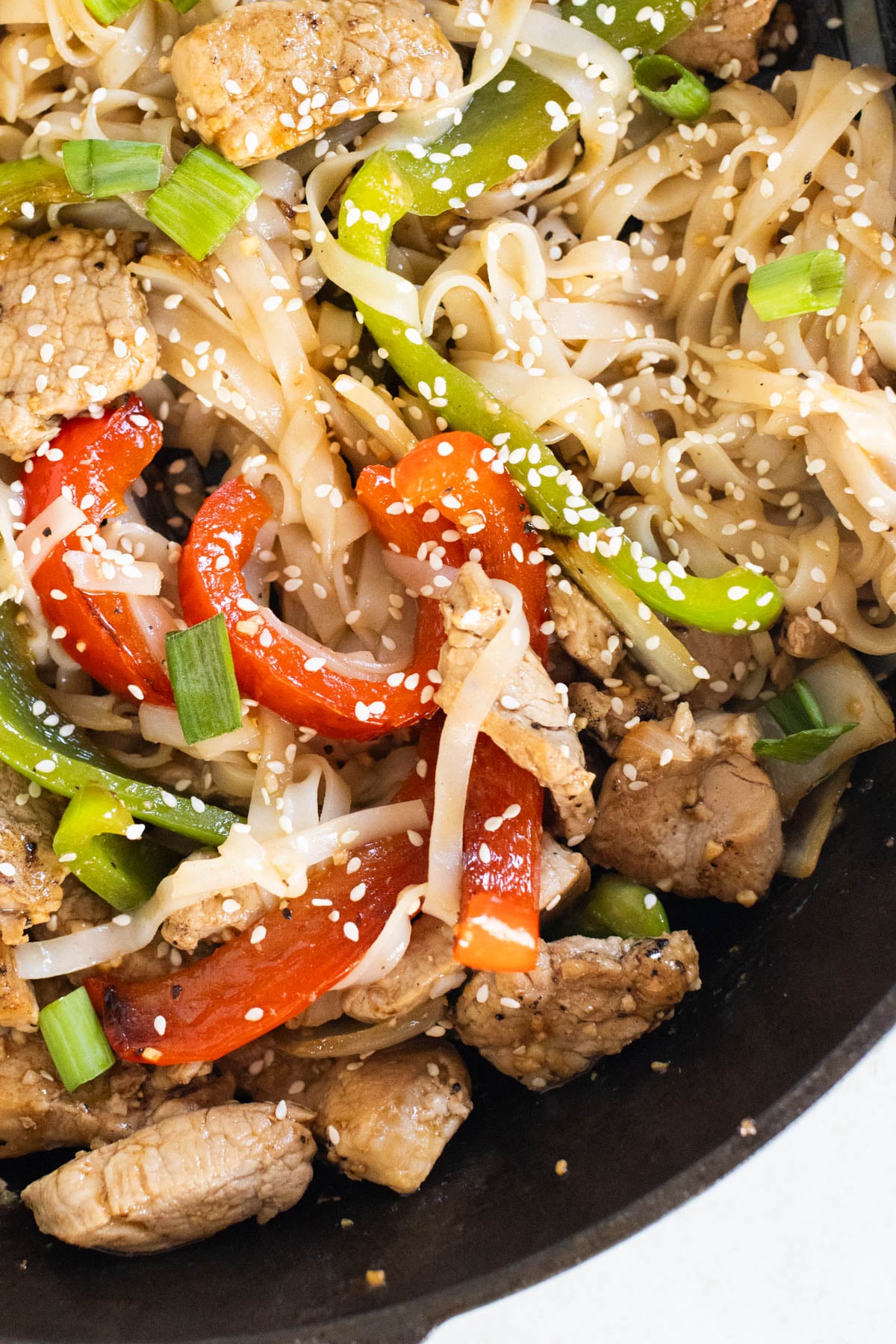
- Add your cooked noodles to the pan and gently toss everything together so the sauce coats everything.
- You can sprinkle sesame seeds and green onions on top of the stir fry, or bring them to the table to let everyone serve themselves.
Make it kid friendly:
The noodles are usually a kid’s favorite part of the pork stir fry. For pickier eaters, cut the vegetables into smaller pieces or let everyone pick their favorites before serving.
Pork Stir Fry Recipe FAQs
Broccoli, snap peas, carrots, mushrooms, and zucchini all work well in this recipe.
Absolutely. The pineapple adds sweetness, but the recipe will still be delicious without it. Using coconut aminos in place of the soy sauce will replace that sweetness from the pineapple.
The key is not to overcook it. Thin strips of pork tenderloin cook quickly, so remove them from the heat as soon as they are cooked through.
Let the sauce simmer for a few extra minutes. The cornstarch needs a little time to thicken the sauce as it cooks.
Serving Suggestions
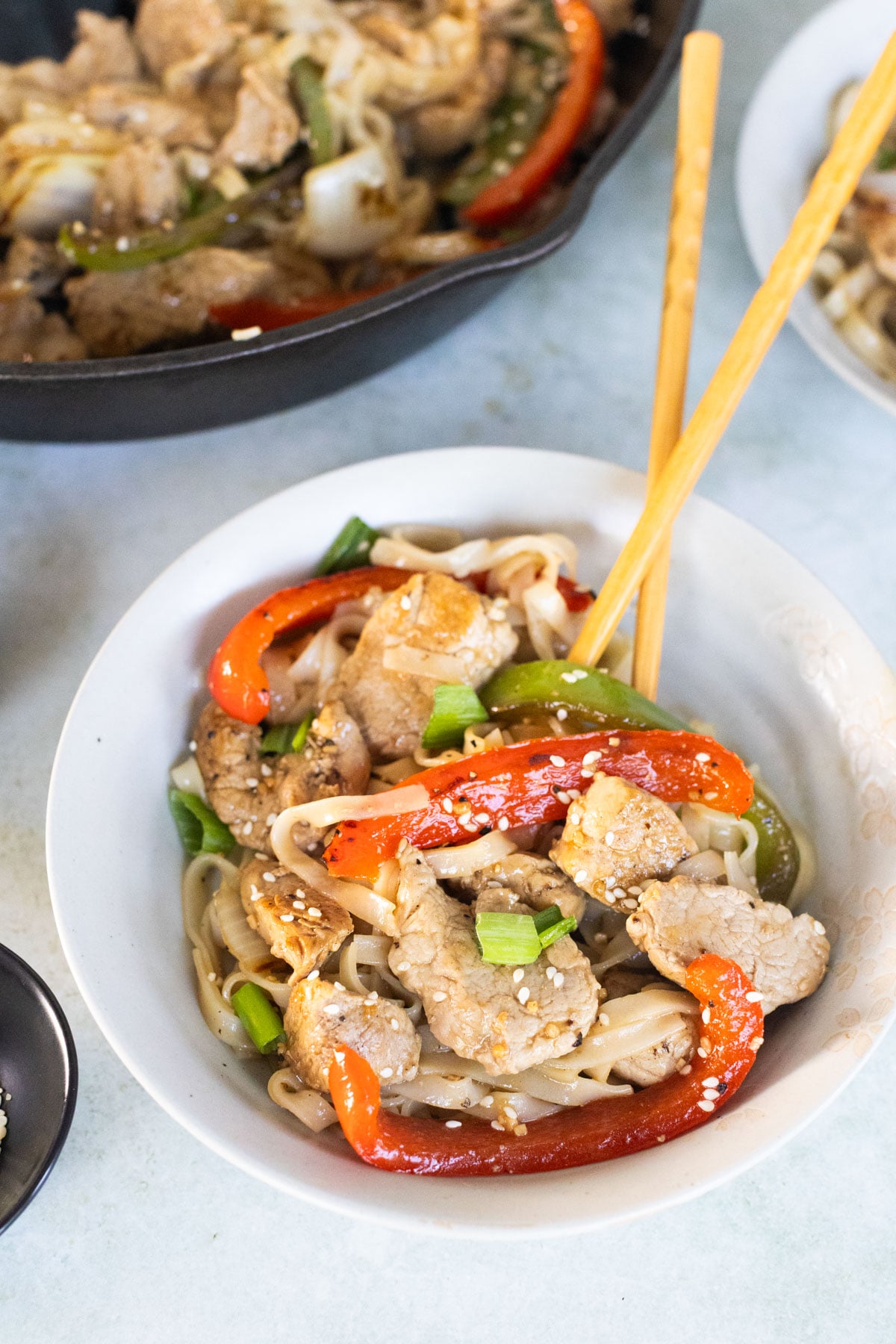
This pork stir fry is delicious served over instant pot rice or cilantro lime rice, both of which do a great job soaking up the extra sauce.
If you're building out the meal, add a simple vegetable side like air fryer green beans or roasted broccoli. For a fun takeout-at-home dinner, start with naruto rolls and finish with the stir fry served over rice.

After you make this recipe, please give it a star rating below and comment to let me know how it went!
Easy Pork Stir Fry
Ingredients
For the Sauce
- ¼ cup low sodium soy sauce or coconut aminos
- 2 tablespoons cornstarch
- 2 medium garlic cloves minced or grated
- 1 tablespoon minced ginger or ginger paste
- 3 tablespoons pineapple juice from canned pineapple
- 1 tablespoon rice vinegar or white wine vinegar
- 2 teaspoons sesame oil or avocado oil
- ½ teaspoon kosher salt
- ½ teaspoon black pepper
For the Stir Fry
- 1 tablespoon sesame oil
- 1 tablespoon avocado oil
- 1 large onion peeled and cut into 1-inch strips
- 2 medium garlic cloves minced
- ½ teaspoon kosher salt
- ¼ teaspoon black pepper
- 1 red bell pepper deseeded and cut into thin slices
- 1 green bell pepper deseeded and cut into thin slices
- 1 pork tenderloin (about 12-16 ounces), cut into thin strips
- 1 cup pineapple chunks fresh or canned, *drain, but reserve 3 tablespoons juice
Optional Garnishes
- 1 green onion thinly sliced
- ½ teaspoon sesame seeds
Instructions
- Make the stir fry sauce (¼ cup low sodium soy sauce, 2 tablespoons cornstarch, 2 medium garlic cloves, 1 tablespoon minced ginger, 3 tablespoons pineapple juice, 1 tablespoon rice vinegar, 2 teaspoons sesame oil, ½ teaspoon kosher salt, and ½ teaspoon black pepper): In a small bowl, whisk all sauce ingredients until smooth, breaking up any clumps of cornstarch. Set aside.
- Heat a large skillet or wok over medium-high heat. When hot, add 1 tablespoon sesame oil and 1 tablespoon avocado oil.
- When oil begins to shimmer, add 1 large onion, 2 medium garlic cloves, ½ teaspoon kosher salt, and ¼ teaspoon black pepper. Sauté, stirring constantly, for 1-2 minutes until fragrant.
- Add 1 red bell pepper and 1 green bell pepper. Sauté for 3-4 minutes until softened. Transfer veggies from pan into a bowl and set aside.
- Add another 1-2 tablespoons of oil if your pan is looking dry. Add 1 pork tenderloin strips to pan and sear for 2-3 minutes per side until cooked through and lightly golden.
- When pork is cooked, return veggies to the pan and add 1 cup pineapple chunks.
- Pour in the sauce and toss everything together. Let sauce thicken for 2-3 minutes, stirring occasionally.
- Serve over rice or noodles, garnished with thinly sliced 1 green onion and ½ teaspoon sesame seeds.
Notes
- Sesame oil has a distinct flavor and is often used in Asian dishes, but it can be a little pricey. Feel free to substitute with avocado or olive oil.
- Rice vinegar is another common ingredient in Asian cuisine. White wine vinegar is a good substitute.