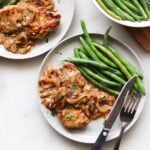
Smothered Pork Chops
Hearty comfort food for busy families, Smothered Pork Chops is a one pan game changer! Make pan seared pork chops and gravy, in 40 minutes!
Servings: 4 people
Calories: 315kcal
Ingredients
- 1 pound boneless pork chops
- 3 tablespoons olive oil or avocado oil
- 2 cloves garlic minced
- 1 large white onion
- 1 tablespoon balsamic vinegar
- ¾ cup chicken broth or stock
- ¼ cup coconut cream heavy cream, or half and half
Pork Chop Seasoning
- ¼ teaspoon garlic powder
- ¼ teaspoon onion powder
- ⅛ teaspoon sea salt
- ⅛ teaspoon black pepper
- ⅛ teaspoon crushed red pepper optional
- ⅛ teaspoon oregano
- ⅛ teaspoon dried thyme
Instructions
- In a small bowl, stir the pork chop seasoning ingredients together. Using a sharp knife, thinly slice the onion and mince the garlic. Set everything to the side.
- Heat the oil in a large skillet over medium-high heat. Use paper towels to pat the pork chops dry. Season them generously on both sides with the pork chop seasoning, then add them to the hot oil.
- Sear on the first side until browned, about 3 minutes. Use tongs to flip the chops over and cook the second side for 3 minutes. *When the meat has a proper sear, the chops will release naturally from the pan- don't force them.Transfer the meat onto a plate and set to the side.
- Reduce the heat to medium-low. Add sliced onions to the same skillet (don't wash it out). Cook the onions for about 20 minutes, stirring occasionally, until soft and caramelized. Add the minced garlic and vinegar, season with salt, and stir to combine. Cook for another 2 minutes.
- Using a wooden spoon, stir in the cream and broth, scraping up any brown bits from the skillet. Return the pork chops to the skillet.
- Bring gravy to a simmer and cook everything over low heat for another 5 minutes, or until the pork chops are cooked to an internal temperature of 145℉.The actual cook time will depend on the thickness of your chops.
Video
Notes
Helpful Cooking Tips
-
- Preheat pan before searing the meat. To create the perfect sear, the pan needs to be very hot.
- Add the oil after the pan preheats, and let the oil get hot before adding the meat.
- Don't move the pork chops around in the pan as they're searing. Don't worry about them burning. Like magic, the meat will release itself from the surface of the hot skillet as soon as the sear is created.
- Use medium-low heat to caramelize the onions. Trust me, if the pan is too hot, the onions will burn. They need to cook slowly so that the sugars are able to caramelize.
- Use an instant-read cooking thermometer to test the internal temperature of the meat. A cooked pork chop is safe to eat when the internal temperature at the thickest portion reaches 145°F (63°C).
Nutrition
Serving: 1 chop | Calories: 315kcal | Carbohydrates: 5g | Protein: 25g | Fat: 21g | Saturated Fat: 7g | Cholesterol: 76mg | Sodium: 309mg | Potassium: 494mg | Fiber: 1g | Sugar: 2g | Vitamin A: 112IU | Vitamin C: 3mg | Calcium: 20mg | Iron: 1mg
